Choosing between automatic and manual glass edge machines is one of the most important equipment decisions for any glass workshop or factory. This choice directly affects productivity, quality, labor requirements, and long-term profitability. This guide provides a detailed comparison of both options with practical insights and real-world considerations to help you select the most suitable edging solution for your production capacity and budget. HISENG Glass Machinery specializes in high-precision automatic glass edging solutions, including straight line and double edger production lines, making it an excellent benchmark for modern automated systems.
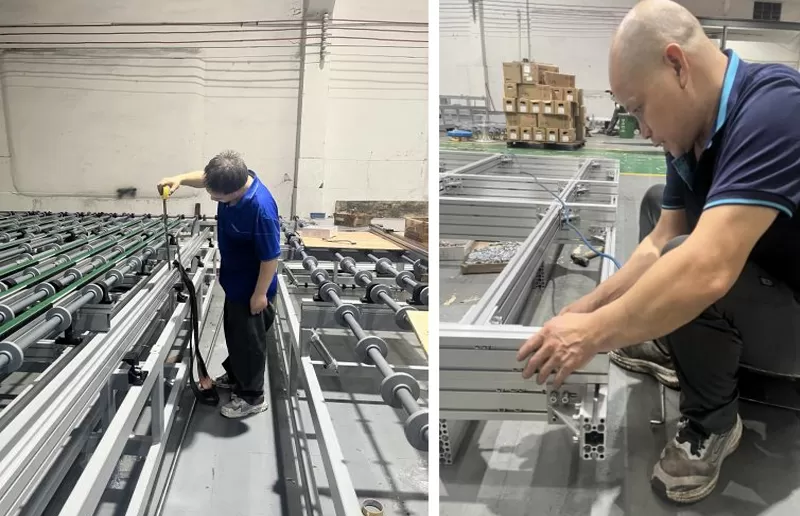
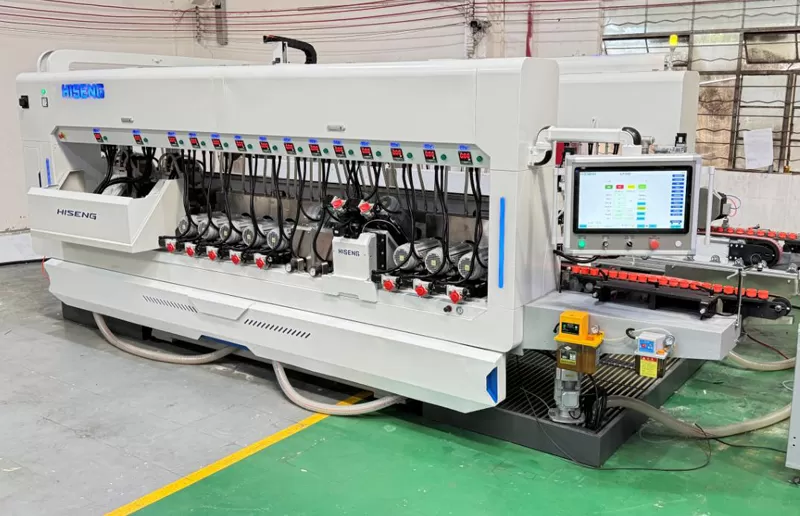
Automatic glass edging machines rely on motorized feeds and programmable controls, whereas manual edge machines depend on operators to physically guide and control the glass during the entire edging process. Manual glass edging machines, often referred to as manual glass grinders or polishers, are usually compact units where the operator manually feeds and positions each glass sheet against abrasive wheels. In contrast, automatic and double-edger lines, such as those offered by HISENG, clamp and transport the glass along powered conveyors, performing grinding, seaming, and sometimes washing in a continuous operation.
Overall, manual machines are favored for their low capital cost and flexibility in handling small batches or custom shapes. Automatic systems, however, excel in repeatability, high throughput, and reduced reliance on operator skill. As automation and smart controls become more common in glass processing, many factories now use a combination of both: manual machines for special or custom jobs and automatic systems for standard parts and high-volume production.
Productivity in glass edging is typically measured by meters of edge processed per minute or square meters of glass handled per hour. Manual glass edge polishing setups often achieve only 3–10 square meters per hour under real-world conditions. This is because operators must manually handle, reposition, and visually control edge contact for each sheet. Automated straight-line or double-edge machines can operate at line speeds of 4–15 meters per minute, depending on glass thickness and desired finish. This translates to 40–120 square meters per hour in continuous production.
Industry analyses indicate that automated edging machines process edges faster than manual methods, significantly boosting productivity and lowering labor costs, especially for standard rectangular architectural and furniture glass. For a factory operating two shifts, the gap between 10 m²/h and 80 m²/h can result in hundreds of thousands of additional square meters of capacity per year within the same floor space.
Labor impact depends on the number of operators needed per machine and the skill level required to maintain consistent quality. Manual edging machines require constant operator attention for loading, holding, guiding, and unloading each piece. This often means one dedicated operator per station, plus additional helpers for larger or heavier glass sheets. Automatic glass straight-line and double-edging lines typically need only one operator to supervise the conveyor, along with material handlers at the loading and unloading ends, particularly when integrated with upstream cutting and downstream tempering lines.
Because automated machines control speed, pressure, and water flow automatically, they greatly reduce operator fatigue and the risk of repetitive strain injuries compared to hand-guided grinding. Over time, this leads to more stable staffing levels and helps retain workers in competitive labor markets, especially where skilled manual grinders are in short supply.
Glass edge quality is evaluated based on geometry (flatness and angle), surface roughness, and consistency across multiple sheets. Manual edging quality varies significantly with operator skill. Differences in feed speed and pressure can lead to visible inconsistencies in bevel width, polish level, and chipping rates between pieces. Automated edging machines maintain constant process parameters and often use multiple spindles or polishing wheels in sequence. This results in superior edge uniformity and fewer micro-chips.
Suppliers highlight that automated machines deliver higher precision and repeatability than manual systems. This is especially valuable for architectural glass and double-glazed units, where edge quality directly influences sealing performance and structural integrity. For high-end furniture, shower doors, and façade glass, the consistent high-gloss flat polish achieved on automatic lines noticeably enhances product appearance and perceived value.
| Criteria | Manual Glass Edge Machine | Automatic Glass Edge Machine |
|---|---|---|
| Typical throughput | 3–10 m²/h for flat glass, depending on operator skill. | 40–120 m²/h on straight or double edgers in continuous mode. |
| Labor requirement | 1 operator per machine, plus helpers for large lites. | 1 line operator, with optional loading/unloading support. |
| Edge quality consistency | Variable; strongly dependent on operator technique. | High consistency and repeatability once parameters are set. |
| Typical investment cost | Low; often a few hundred to a few thousand USD per unit. | Higher; from tens of thousands to over 100,000 USD for full lines. |
| Best use case | Small workshops, repairs, custom edges, low volumes. | High‑volume architectural, furniture, and IG line integration. |
| Footprint | Very compact, portable options available. | Larger footprint for straight or double‑edge lines. |
| Training difficulty | Low‑tech machine but high skill needed for top quality. | More complex machine, but quality less dependent on operator skill. |
The best glass edging setup depends mainly on production volume, product mix, and available capital. For small workshops, repair shops, and custom glass studios handling less than 200–300 square meters per month, a manual edge polisher or small semi-automatic unit often provides the optimal balance of cost and flexibility. High-volume factories serving architectural, appliance, or furniture markets, which process thousands of square meters monthly, benefit greatly from fully automatic straight line or double edger lines like the HISENG HSDN series.
Integrated automatic edging can synchronize smoothly with glass washing, drilling, and tempering lines. This reduces handling steps and lowers breakage risk in larger facilities. Many industrial producers recover the higher initial investment through reduced unit labor costs and improved first-pass yield within one to three years, depending on local wages and operating hours. To explore automatic edging options for different production scales, refer to the HISENG glass edging machine product catalog, which covers straight line, double edger, and supporting automation solutions.
Total cost of ownership for glass edging equipment includes purchase price, energy consumption, consumables such as wheels and belts, maintenance, labor, and downtime. Manual machines have lower upfront costs, but wheel wear per square meter tends to be higher due to inconsistent manual pressure. Labor costs per unit are also significantly greater than with automatic lines. Automatic edgers consume more power and require more sophisticated spare parts, yet they achieve a lower cost per square meter at scale through faster throughput and better yield.
Maintenance for manual machines is relatively simple, focusing on basic lubrication, abrasive wheel replacement, and safety checks. Automated edging lines require more structured preventive maintenance on conveyors, spindles, pumps, sensors, and control systems, typically following daily or weekly checklists and periodic manufacturer service. Training for manual edging emphasizes safe glass handling, consistent pressure application, and visual defect recognition. Automatic machines require instruction on control panels, recipe settings, alarm handling, and basic diagnostics. Once properly set up, however, operators can maintain stable quality with less ongoing fine-tuning than manual grinding.
Selecting between automatic and manual glass edgers involves balancing production volume, product mix, budget, and labor availability to achieve the lowest cost per square meter while meeting quality requirements. Experts recommend starting with a detailed list of needs, including glass thickness range, edge types (flat, arris, or bevel), maximum sheet size, target output, and integration requirements with existing cutting, washing, or tempering equipment. For instance, HISENG’s HSE-11S straight line edging machine is designed for high-speed, precise edging of architectural and electronic glass, making it ideal for factories requiring repeatable quality on standard rectangular parts.
As a general guideline, if your workshop frequently processes the same sizes with stable or growing demand, an automatic edger usually provides better long-term economics. If the focus is on bespoke shapes, restoration work, or occasional edging, a manual or semi-automatic solution remains the most flexible and affordable option. If you are uncertain about the best configuration for your facility, you can request a layout and capacity consultation through the HISENG contact page to evaluate suitable automatic edging lines for your space and product range.
A glass edging machine removes sharp edges and polishes the perimeter of glass sheets to enhance safety, appearance, and compatibility with frames or insulating units.
Automatic edgers are significantly faster for standard rectangular glass because they operate continuously at controlled line speeds, while manual methods process one edge or sheet at a time.
For low volumes and custom work, a manual edger can be sufficient and cost-effective, particularly if the shop processes only a few dozen square meters per week.
Most operators can learn basic operation of an automatic straight line edger within a few days, though several weeks may be needed to master advanced parameters and troubleshooting.
Key tasks include cleaning and checking coolant systems, inspecting wheels and spindles, lubricating bearings, monitoring conveyor belts, and responding to alarms according to the machine’s operation and maintenance manual.
Payback is typically calculated by comparing current labor and scrap costs with projected costs on the automatic line. In high-volume operations, this often results in a payback period of 1–3 years.
In modern glass production, automatic edging machines generally deliver superior productivity, consistency, and long-term cost efficiency compared to purely manual solutions, particularly when volumes exceed a few hundred square meters per month. Manual edgers continue to serve an important role in small workshops, on-site adjustments, and custom work where flexibility and low initial investment are priorities. HISENG’s range of straight line and double-edge glass machines provides factories with a scalable path from entry-level automated edgers to fully integrated high-speed lines as demand increases. By carefully evaluating your production volume, product mix, labor availability, and budget, you can select a configuration that ensures safe, high-quality glass edges and a strong return on investment.

 EN
EN
 jp
jp  fr
fr  de
de  fa
fa  es
es  ru
ru  pt
pt  tr
tr  ar
ar  vi
vi