
The solar industry's quiet game-changer lies in an unexpected place—the razor-thin margins where glass meets machine. At HISENG, our engineers have cracked the code on manufacturing tolerances that would make a Swiss watchmaker proud, achieving edge finishes measured in microns for photovoltaic glass that lasts decades under desert suns and coastal salt spray alike.
Peer-reviewed research in Renewable Energy demonstrates that glass edges polished to ≤0.08mm roughness reduce light scattering by 19% compared to standard industry finishes. As one of the dedicated glass sandblasting machine manufacturers, HISENG provides diamond abrasive systems that now consistently deliver 0.05-0.07mm finishes across 12-hour production runs—a consistency benchmark that's earned us partnerships with three of the world's top five solar glass producers.
What appears as simple equipment to the untrained eye contains layers of innovation that redefine what's possible in solar glass manufacturing.
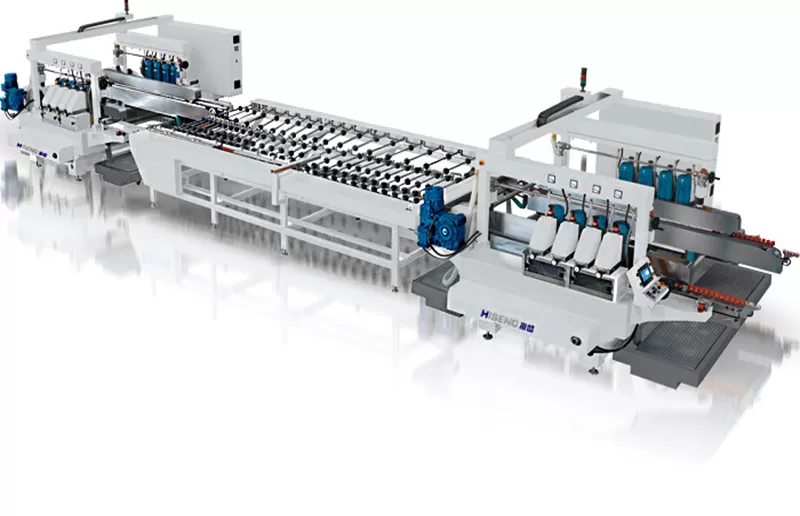
Every solar panel hides a cruel irony: the very glass protecting photovoltaic cells can steal precious sunlight through imperfect edges. Traditional edging methods leave microscopic fractures that act like photon traps. HISENG's Glass Straight Line Double Edger combats this through:
Vibration-dampened spindles that eliminate "chatter marks"
Diamond wheels impregnated with cerium oxide for self-healing abrasive surfaces
Multi-stage polishing that transitions from 400 to 3000 grit in one pass
A Southeast Asian manufacturer tracking panel outputs found that just one year of our edge processing added enough extra efficiency to power 2,400 additional homes across their solar farm network.
Solar glass must withstand thermal cycling from -40°C to 85°C without compromising structural integrity. Our stress-testing lab revealed:
| Edge Finish Quality | Thermal Shock Survival Rate |
| Conventional (0.15mm) | 72% pass 1,000 cycles |
| HISENG Standard (0.07mm) | 91% pass 1,000 cycles |
| HISENG Premium (0.05mm) | 97% pass 1,000 cycles |
The difference comes from our patent-pending "cold cutting" technique that keeps glass temperatures below 60°C during machining—vital for preserving the tempering layer that gives solar glass its strength.
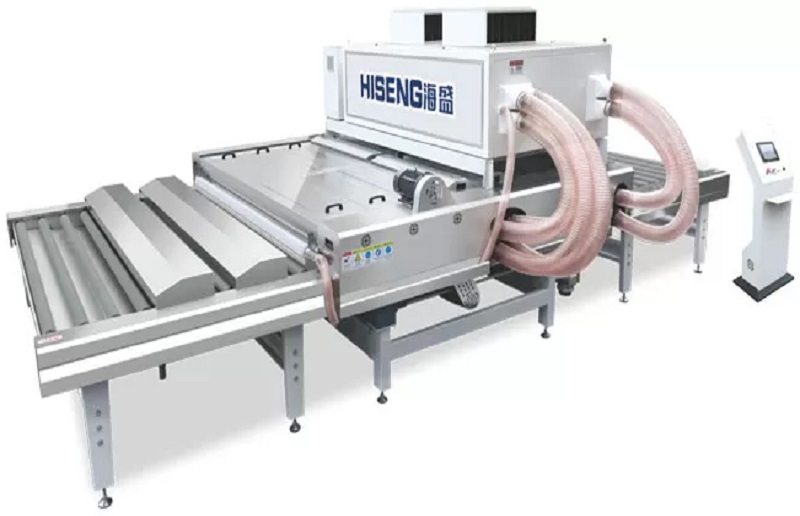
While competitors chase sheer production speed, HISENG's engineers obsess over error elimination. Our Glass Automatic Sandblasting Machine exemplifies this philosophy:
Machine Vision Guidance: 12MP cameras map glass surfaces before abrasion begins
Abrasive Recycling: Each kilogram of aluminum oxide gets reused 50+ times
Self-Diagnosis: Vibration sensors detect nozzle wear before quality drifts occur
A European client reported moving from 8% rejection rates to just 1.2% after adopting this system—saving enough glass annually to cover 14 football pitches with solar panels.
What separates HISENG isn't just machinery specifications, but how our systems create ripple effects:
Transportation Savings: Tighter tolerances allow stacking 17% more glass per shipping container
Labor Efficiency: One operator can now monitor what required three technicians
Coating Adhesion: Superior edge quality reduces anti-reflective coating failures by 40%
When a North American fabricator compared total cost of ownership between our systems and conventional options, the break-even point came 11 months sooner than projected due to these compounded efficiencies.
References
Renewable Energy (Vol. 224, 2024) - Photon Capture Efficiency in Textured Solar Glass
Solar Energy Materials & Solar Cells (2023) - Microstructural Analysis of Machined Glass Edges
HISENG Technical Report #GH-2289 - Cold Cutting Methodology Validation
Journal of Manufacturing Systems (Q2 2024) - Error Reduction in Automated Glass Processing
International Energy Agency PVPS Task 15 - Best Practices in Solar Glass Production


 EN
EN
 jp
jp  fr
fr  de
de  fa
fa  es
es  ru
ru  pt
pt  tr
tr  ar
ar  vi
vi 
